
Disclaimer: This article is based primarily on the research of Dr. Tim Oortwijn and his team. Pulsar Wildlife is not associated with Dr. Oortwijn or his work but shares this exciting advancement with our community of birdwatchers and wildlife enthusiasts.
Modern thermal binoculars are unlocking secrets in the tundra – helping researchers work smarter, faster, and with less stress on the birds. Out on the windswept tundra of Alaska, spotting a wader’s nest is like searching for a needle in a haystack – if that needle were motionless, perfectly camouflaged, and surrounded by dozens of identical “haystacks”.
For years, researchers studying hard-to-find species like the Red Knot, along with other elusive shorebirds such as American and Pacific Golden Plovers or Rock Sandpipers, struggled to find nests and chicks without causing disturbance. But now, thanks to advances in handheld thermal imaging, scientists are getting a helping hand.
Dr. Tim Oortwijn, a researcher from the Netherlands working with his team, recently demonstrated how handheld thermal binoculars are revolutionizing wader fieldwork. His study, published in Wader Study, shows how thermal vision devices help locate nests and chicks – even in near-invisible conditions – while reducing disturbance to the birds.

Why wader nests matter?
Many wader species, including Red Knots, nest on the ground. Their eggs, chicks, and even the adults are expertly camouflaged – an advantage against predators, but a real challenge for scientists.
Studying these nests is crucial for understanding breeding success, chick survival, and the effects of climate change on bird populations. But traditional methods – like dragging ropes through the tundra or watching birds for hours on end – are time-consuming, stressful for the birds, and often ineffective.
Thermal power in action
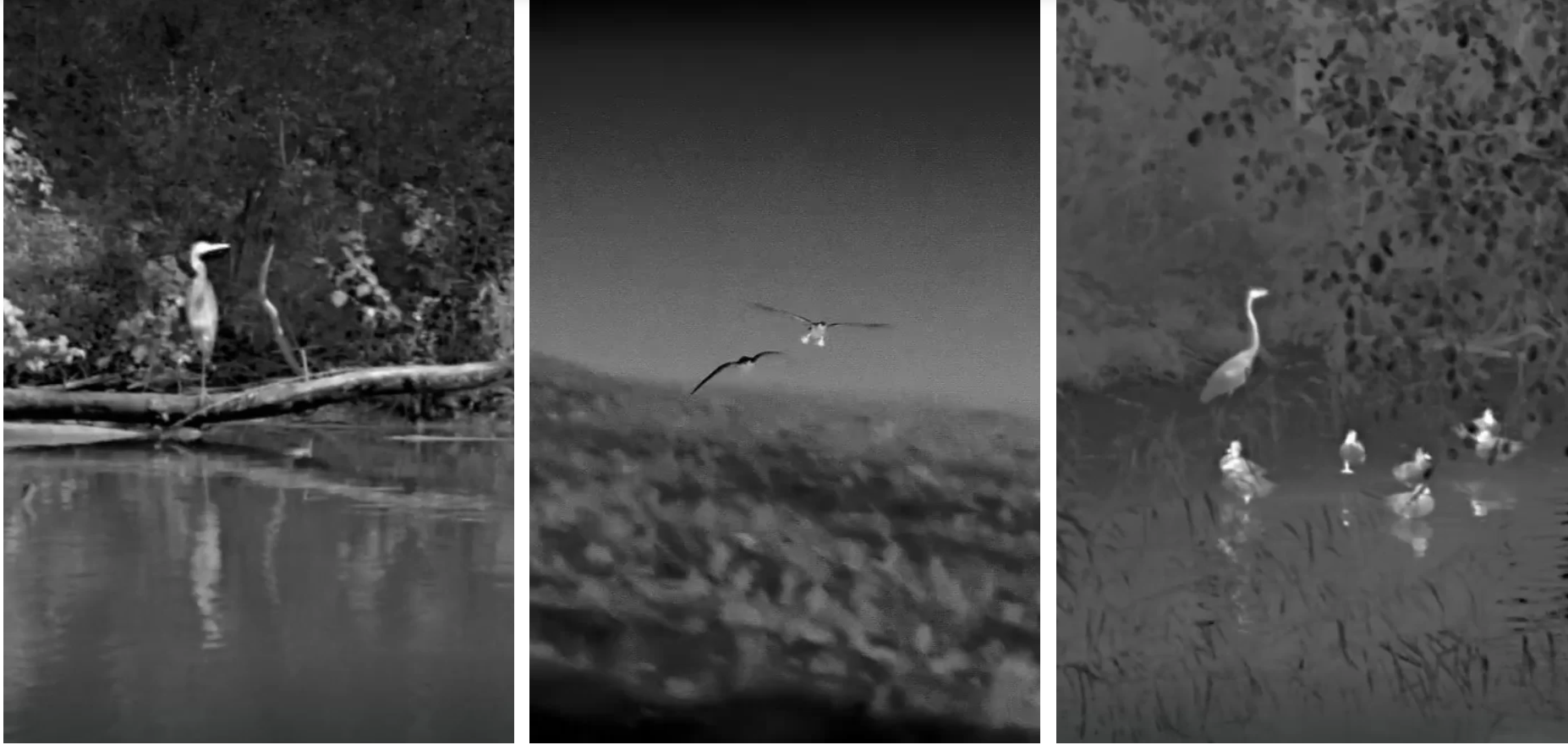
Dr. Oortwijn and his team used Pulsar Merger thermal binoculars, which detect subtle heat differences in the environment. Even motionless incubating birds emit enough heat to stand out from their surroundings, visible from distances over 100 meters without causing disturbance.
In Alaska’s Seward Peninsula, close to Nome, the team located 16 Red Knot nests during the 2024 breeding season – a number unlikely to be reached with traditional search methods. Optimal detection conditions came early in the morning or on cloudy days, when thermal contrasts were strongest and the environment’s heat signature was stable.

One of the biggest challenges in wader research is locating well-camouflaged chicks that hide motionless to avoid predators. The team combined radio tracking of tagged adult birds with thermal scans to locate their chicks.
Interestingly, chicks showed even stronger thermal signatures than adults, likely due to their less-developed insulating plumage and higher metabolic rates. This advantage helped researchers quickly find and monitor chicks without causing unnecessary disturbance.
Nighttime monitoring made easier
Thermal imaging is not limited to daytime nest searches. At a nonbreeding site in West Africa, the team used thermal binoculars to monitor mist-net captures during dark nights. This improved capture success and helped reduce accidental bycatch.
The team discussed that devices’ built-in laser rangefinder could allow precise distance measurements, enabling researchers to approach birds quietly and set up nets or light traps with minimal disturbance. This capability makes nocturnal fieldwork safer and more effective.
A bright future for bird conservation
Thermal imaging technology is opening new doors for field scientists by making it easier to study secretive, camouflaged species. The ability to detect nests and chicks quickly and accurately benefits conservation efforts by providing better data on breeding success and survival rates.
As equipment becomes more affordable and user-friendly, thermal binoculars are likely to become a standard tool in wildlife research, helping scientists worldwide protect vulnerable species and better understand their behaviors in an ever-changing environment.