
Every autumn, the skies over Northern Europe come alive. Tiny sandpipers gather on tidal mudflats, restless swallows fill the air above hedgerows, and great skeins of geese stretch across foggy horizons. For birdwatchers, it’s a season full of energy and movement. But it also brings challenges: light fades earlier each day, mornings are colder, and mist or dense cover often make it hard to spot birds with traditional optics.
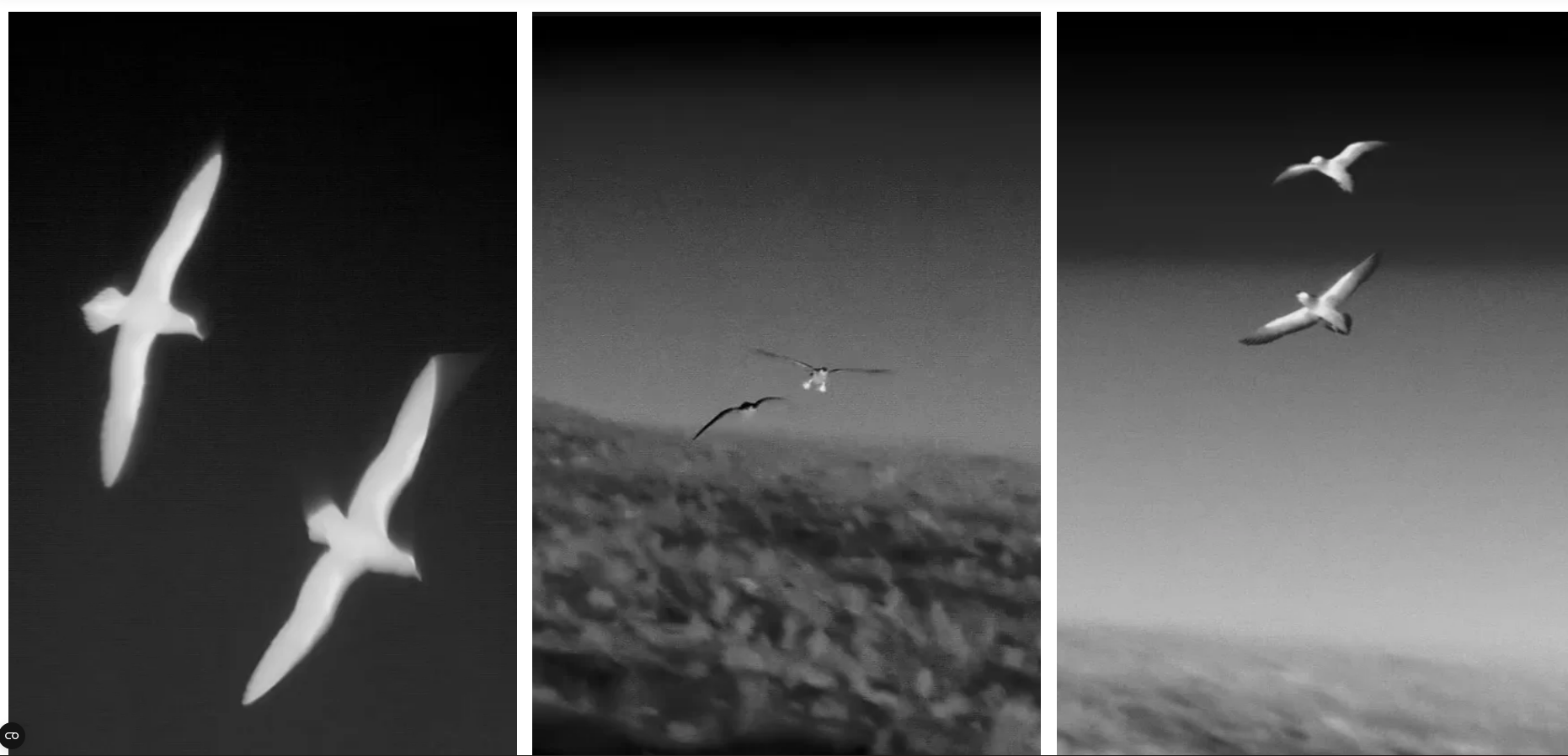
This is where thermal imaging proves its value. By detecting heat instead of light, thermal optics reveal birds in all conditions – at dusk, in fog, or deep in cover. Silhouettes stand out clearly, and behaviors that normally go unseen become visible. With devices like the Axion Compact, Telos, and Merger LRF, birders can choose the right tool for their style – whether scanning mudflats, exploring hedgerows, or documenting large flocks on the move.
Understanding autumn migration patterns
Migration doesn’t happen in one rush – it comes in waves. In late summer, waders and shorebirds such as sandpipers, plovers, and curlews are the first to head south. September brings the peak passage of swallows, warblers, pipits, and raptors, filling both skies and hedgerows. Then, from October into November, the big flocks arrive: geese, cranes, thrushes, and winter visitors settling in for the colder months.
Shorter days and cooler nights make these movements harder to follow but also create the perfect conditions for thermal observation.
Why thermal makes a difference?
Autumn is often described as the season of missed chances: the call you hear but can’t see in the dark, the flock that disappears into fog, the raptor slipping away into shadow. Thermal devices turn those near-misses into real sightings. They:
- cut through fog and twilight,
- highlight birds against cooler backgrounds,
- allow quiet, non-intrusive observation,
- and record video and sound for later review.
In short, they extend the hours you can spend birding and increase your chances of catching migration at its best.

Early season: waders and shorebirds
Wetlands, estuaries, and mudflats are alive with waders in late summer. After dusk, these birds often gather in roosts, where spotting them with the naked eye can be difficult.
Thermal tip: Scan across cool water surfaces to pick out the warm bodies of sandpipers, plovers, and curlews huddled together.
Recommended device: Axion Compact XQ30 Pro
Lightweight and pocket-sized, the Axion XQ30 Pro is easy to carry on long coastal walks. With a wide field of view and quick scanning ability, it’s ideal for finding small, moving birds on open mudflats or picking out hidden individuals in tall grasses.

Peak migration: songbirds and raptors
By September, the season reaches its busiest phase. Swallows, martins, warblers, and flycatchers gather in huge numbers, while raptors such as falcons, harriers, and buzzards prepare to move south. Many of these birds roost in hedgerows, reedbeds, or woodlands, often settling in just as daylight fades.
Thermal tip: Use thermal optics to detect small passerines in hedgerows at dusk, and to follow raptors gliding into evening roosts.
Recommended device: Telos XG50
The Telos XG50 is versatile and adapts easily to different habitats – from open fields to woodland edges. Its long reach and high sensitivity make it especially useful for picking out tiny passerines in dense cover or tracking raptors at distance. It’s the go-to choice for birders who want more detail and range during peak migration.

Late season: geese, cranes, and thrushes
As the year turns colder (late September – November time), vast numbers of geese and cranes arrive, often in noisy, spectacular flocks. At the same time, thrushes migrate more quietly, often at night, and can be difficult to track by sound alone.
Thermal tip: From elevated viewpoints such as dunes or towers, use thermal binoculars to spot distant heat signatures of flocks, even on misty mornings.
Recommended device: Merger LRF XP35
With its wide field of view, the Merger LRF XP35 is built for scanning large bird formations. Because it’s a binocular, it feels natural and comfortable to use over long sessions, while the built-in laser rangefinder lets birders measure the distance and altitude of flocks with precision – ideal for documenting large-scale migration events.

A season made brighter with thermal optics
Autumn migration is one of Europe’s great natural spectacles. With thermal devices, birders can extend their time in the field and experience migration in new ways – from the glow of waders on a dark mudflat to the distant outline of geese cutting through fog.
Whether you carry the Pulsar Axion Compact, rely on the adaptable Pulsar Telos, or scan wide skies with the Pulsar Merger, thermal birding opens the door to sightings and experiences that would otherwise remain hidden.